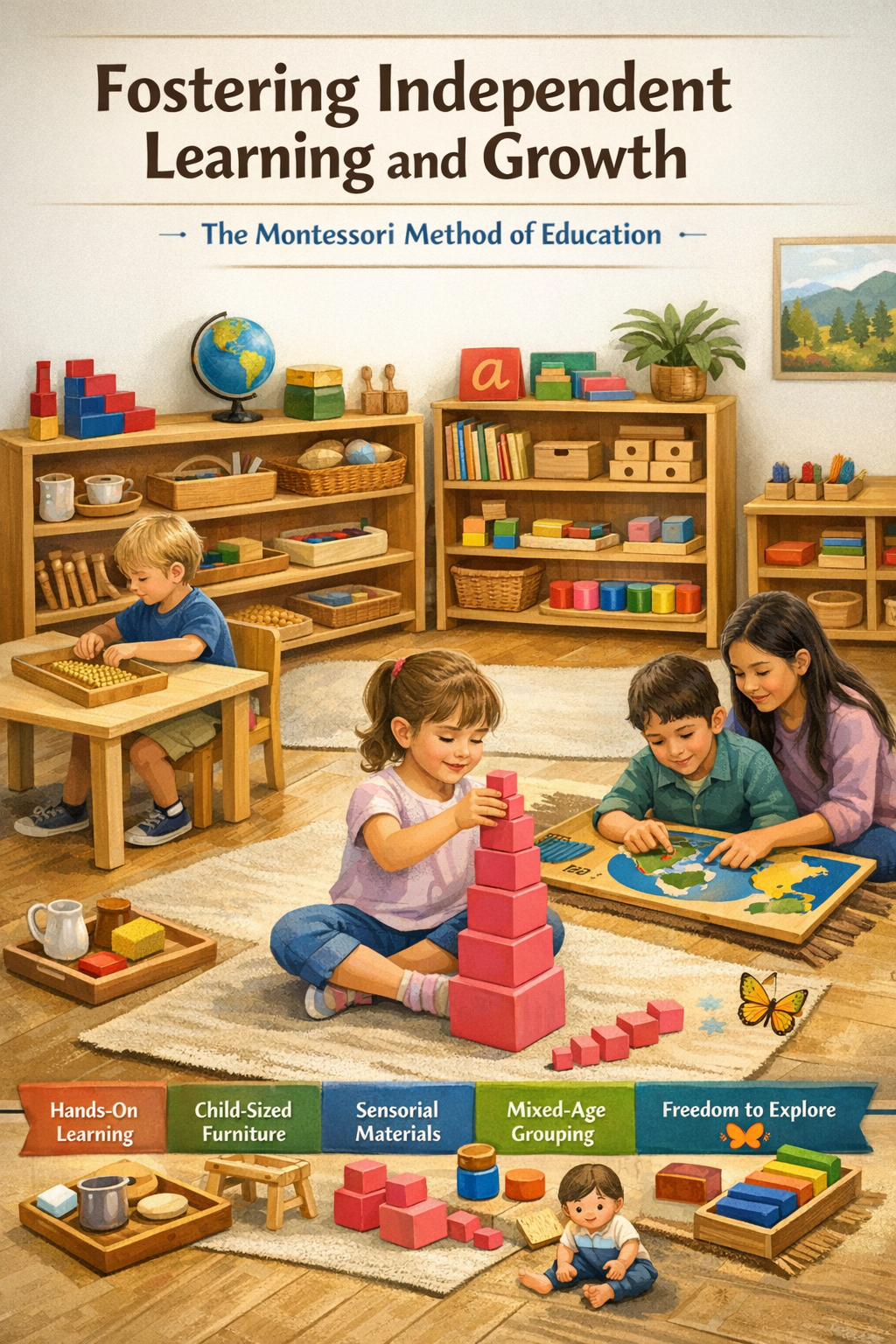
The Montessori Method has been a transformative approach to early childhood education for over a century. Created by Dr. Maria Montessori, this method centers around the concept that children learn best in an environment that is structured to support their independence, exploration, and natural curiosity. The Montessori philosophy is based on the belief that children are naturally eager to learn, and that the right materials, environment, and guidance can help foster this intrinsic desire.
If you’re looking to introduce Montessori learning into your child’s life, it’s important to understand the core principles of the method and the types of materials or “essentials” that support its framework. Montessori learning essentials include carefully curated materials, furniture, and activities designed to help children develop life skills, creativity, critical thinking, and a love for learning. In this blog, we will explore the key Montessori learning essentials and how you can incorporate them into your home or classroom to promote independent learning.
What Makes Montessori Learning Different?
Before we dive into the essentials, let’s quickly revisit the unique principles that define Montessori
learning. At its core, the Montessori Method:
1. Encourages Self-Directed Learning: Children are given the freedom to choose their own learning
activities, allowing them to follow their interests and learn at their own pace.
2. Promotes Hands-On Learning: Montessori learning is rooted in physical engagement. Children
interact with materials and activities that allow them to experience abstract concepts in a
tangible, sensory way.
3. Focuses on Mixed-Age Grouping: Montessori classrooms typically include a range of ages
(usually spanning 3 years), which encourages peer learning and mentoring.
4. Emphasizes Freedom within Limits: While children have the freedom to choose their activities,
there are clear expectations, limits, and respectful rules for behavior within the learning
environment.
5. Supports Individual Development: Montessori learning is tailored to meet each child’s needs,
allowing them to develop at their own pace while mastering foundational skills.
Key Montessori Learning Essentials
Here are the primary Montessori essentials that support learning at home or in the classroom:
1. Montessori Furniture
One of the main features of Montessori classrooms is the furniture, which is specifically designed for children to encourage independence and mobility.
- Child-Sized Furniture: Montessori furniture is scaled to children’s size to promote independence. Low tables and chairs allow children to sit, stand, and work on their own. It’s essential that the furniture is comfortable, accessible, and encourages the child to move freely.
- Shelving and Storage: Low shelves allow children to access materials independently. Having organized, visible storage makes it easy for children to choose and return materials with minimal assistance. Shelves should be open and accessible, so children can choose their activities.
- Floor Mats: Montessori environments often use floor mats or rugs to define a space for work. These mats encourage children to work on the floor, which is a part of the Montessori philosophy of learning through tactile and physical engagement. The practice helps children maintain focus and understand that the space they choose to work in is their own.
2. Montessori Materials
Montessori materials are hands-on tools that provide children with the opportunity to experience lessons and concepts through touch and active engagement. These materials help children develop cognitive, motor, and sensory skills. They are designed to be self-correcting so that children can independently figure out when they’ve made a mistake.
Key Montessori materials include:
- Practical Life Materials: These materials teach children practical, everyday skills such as pouring, sweeping, buttoning, or folding. They help develop fine motor skills, hand-eye coordination, and a sense of responsibility. Items like child-sized brooms, pitchers, sponges, and cloths allow children to practice these life skills.
- Sensorial Materials: These materials are designed to engage children’s five senses and help them understand concepts like color, size, shape, weight, and texture. Examples include the color tablets, sound boxes, and the Pink Tower, a set of cubes that build from large to small to help children grasp the concept of size.
- Mathematics Materials: Montessori math materials are tactile and visual, helping children internalize abstract math concepts. Items like the Golden Beads, Number Rods, and the Bead Frame make it easier for children to understand basic arithmetic, from counting to addition and subtraction.
- Language Materials: Montessori language materials support early literacy, from learning the alphabet to reading and writing. Sandpaper letters, moveable alphabets, and phonetic objects allow children to build the foundation for reading and writing through exploration and play.
- Geography and Science Materials: Montessori offers a range of materials to help children explore geography, history, and science. From maps of the world to animal figurines, these materials spark curiosity and introduce children to concepts of the natural world.
3. Montessori Learning Toys
Montessori learning toys are designed to promote independent thinking, concentration, and problemsolving. These toys are often simple and made from natural materials, ensuring that children engage with them on a deeper level.
- Wooden Puzzles: Simple puzzles help children develop problem-solving skills, hand-eye coordination, and fine motor abilities. They can range from basic shapes to more complex ones, offering incremental learning opportunities.
- Shape Sorters: These toys help children understand the concepts of shapes, size, and color. They promote cognitive development and encourage problem-solving as children work to fit shapes into corresponding spaces.
- Building Blocks: Wooden blocks, such as the classic Montessori-style blocks, encourage creativity and help children understand the concepts of construction, balance, and symmetry. They also help develop spatial awareness.
- Bead Threading and Lacing Toys: These toys enhance fine motor skills by encouraging children to thread beads or lace them into patterns. They also promote hand-eye coordination and concentration.
4. Montessori Books
Books are essential tools in the Montessori environment, as they encourage reading, comprehension, and independent exploration. A good Montessori book collection includes a balance of fiction and nonfiction, offering children opportunities to learn about the world around them. Topics range from science and nature to culture and history, sparking curiosity and inspiring self-directed learning. Books should be engaging and age-appropriate, with a focus on stories or topics that help develop socialemotional skills, problem-solving, and language comprehension.
5. Montessori Environment and Setup
The environment in which a child learns is just as important as the materials they use. In the Montessori philosophy, the environment should be welcoming, organized, and child-centered. Here’s how to create a Montessori-inspired environment at home:
- Open, Calm, and Inviting: A clean, organized, and calm environment helps children focus and feel comfortable exploring. There should be clear spaces for specific activities and materials.
- Freedom to Move: The environment should allow children to move freely, choosing where and how they want to work. This promotes independence and respect for their learning process.
- Natural Materials: Montessori classrooms and home setups often use natural materials like wood, metal, glass, and cotton instead of plastic. These materials provide sensory experiences and connect children to nature. Benefits of Montessori Learning Essentials Montessori learning essentials encourage independence, confidence, and a sense of responsibility. The key benefits of using Montessori materials and creating a Montessori-inspired environment include:
- Fostering Independence: Children are given the freedom to choose their learning activities and are encouraged to work independently. This fosters a sense of autonomy and self-reliance.
- Enhancing Concentration: Montessori materials are designed to captivate a child’s interest, encouraging sustained concentration and focus on a single activity. This helps develop attention span and discipline.
- Promoting Critical Thinking: The hands-on nature of Montessori materials encourages children to explore, problem-solve, and make discoveries. They learn through trial and error, which enhances their critical thinking skills.
- Supporting Emotional and Social Growth: The Montessori method promotes collaboration and respect for others. Children often work together, learning to share, collaborate, and communicate effectively.
Final Thoughts
Montessori learning essentials provide children with the tools they need to explore, learn, and grow independently. With carefully designed materials that engage the senses and spark curiosity, Montessori offers a unique approach to early childhood education that values the child’s role as an active participant in their learning journey. By incorporating Montessori essentials at home, parents can create a learning environment that encourages curiosity, fosters independence, and supports their child’s natural development. With the right furniture, materials, and mindset, the Montessori approach can make learning a fun and transformative experience for every child.